Do you really need 8 glasses of water a day?
No, not as a strict rule: eight glasses is a reasonable rough goal, but your real need depends on your body, activity and climate, and tea, coffee, milk and food all count. Mayo Clinic (2026) calls eight glasses easy to remember and a good goal while noting some people need less and others more. The NHS (2023) suggests 6 to 8 cups or glasses of fluid as a guide.
"Eight glasses" is a reminder, not a prescription; the colour of your pee is a better daily check.
Questions people ask about the 8 glasses rule
Where did the 8 glasses of water rule come from?
Nobody has traced it to a study. A 2002 review in the American Journal of Physiology looked for scientific evidence behind "8 x 8" for healthy adults and found none.
How much water should I drink a day?
The NHS (2023) suggests 6 to 8 cups or glasses of fluid a day as a guide. Mayo Clinic (2026) cites studies suggesting about 11.5 to 15.5 cups (2.7 to 3.7 litres) of total fluid, a figure that includes water from food, and says needs vary with body, activity and environment.
Does coffee count toward water intake?
Yes. Both the NHS (2023) and Mayo Clinic (2026) count tea and coffee. A small 2014 trial in 50 men found no sign of dehydration from moderate daily coffee.
How can I tell if I'm drinking enough?
Look at your pee. The NHS (2023) suggests aiming for a clear pale yellow; Mayo Clinic (2026) says colourless or light yellow and not often feeling thirsty are signs you're getting enough.
Can you drink too much water?
It's rare for healthy adults, but yes. Mayo Clinic (2026) explains that when the kidneys can't get rid of the excess, sodium levels can fall too low. That's hyponatremia, and it can be life-threatening.
Does food count as water?
Yes. Mayo Clinic (2026) says food provides about 20% of the water you need each day.
Honest limits
- The total-fluid figures are population averages. They're not a personal target.
- The coffee trial was small: 50 men who already drank coffee. It doesn't speak for very high intakes, pregnancy, or caffeine-sensitive people.
- Body Unpacked teaches; it doesn't track how much you drink, and it gives no individual advice.
- Its content is checked by the developer against cited public sources and hasn't been independently reviewed by a clinician.
This is general information, not medical advice. Talk to your clinician.
The same question, inside the app
"Do you need 8 glasses of water a day?" is one of the six questions in Body Unpacked's Evidence Lens, broken into separate statements. Each one is labelled by the kind of evidence behind it, from an established physiological role down to insufficient evidence, with its study type and named source.
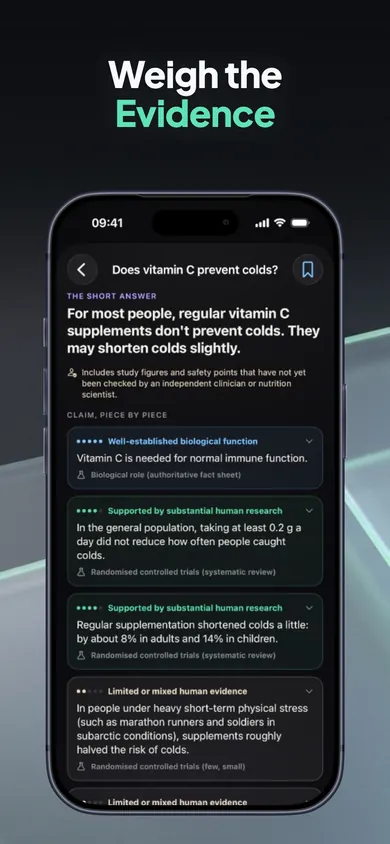 evidence labelnamed source
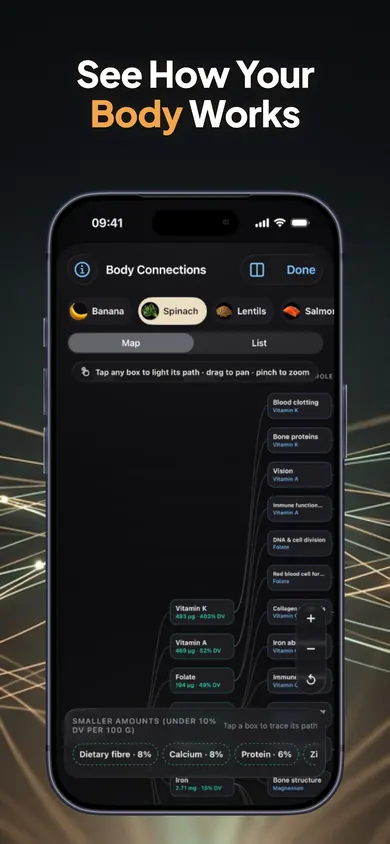 food to body
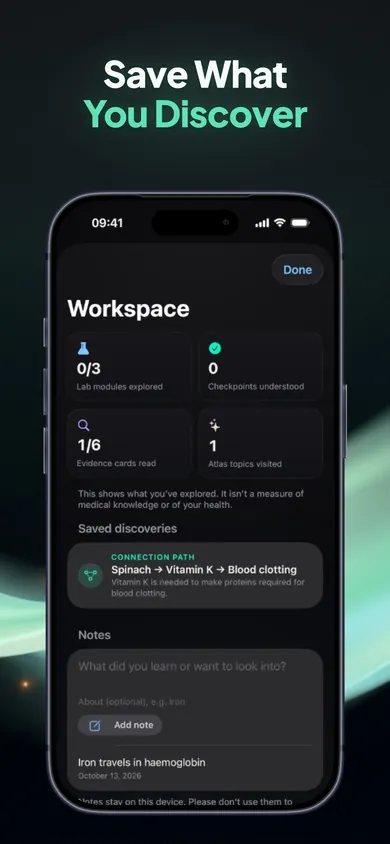 your notes
What counts toward your daily fluid
| Drink or food | Counts? | Source |
|---|---|---|
| Water | Yes | NHS, 2023 |
| Tea and coffee | Yes (NHS says lower-sugar) | NHS, 2023; Mayo, 2026 |
| Milk | Yes (NHS says lower-fat) | NHS, 2023; Mayo, 2026 |
| Food | About 20% of daily water | Mayo, 2026 |
| Soda and sports drinks | Fluid, but with sugar, salt and calories | Mayo, 2026 |
Most of what you drink in a day already counts; the 8x8 rule just never said so.
How to check any health claim in Body Unpacked, in 3 steps
- Open Evidence Lens. Pick one of the six popular questions, water included.
- Read it piece by piece. 23 statements in total, each with its evidence label, study type and source.
- Follow the link. Jump into the atlas topic, switch between Simple, Standard and Deep dive, and save it to your Workspace.
Who this is not for
If you've been told to limit fluids because of a heart or kidney condition, follow your care team, not a flip card. If you want something that reminds you to drink through the day, Body Unpacked won't; we also make Dropkin, a water reminder app, for that job. And if you want a personalised number, ask a clinician or dietitian.
Make it a habit with Body Unpacked
One question a day, sourced, offline, no account. Get Body Unpacked on the App Store.

Updated November 2026
Related
- Body Unpacked: a human body and nutrition atlasFollow a food into your body: pick spinach, tap iron, see its job and where it happens. A sourced human body and nutrition app for iPhone.
- Vitamins from food vs supplements: when each one winsFood first, or a pill? Six scratch cards show what NIH and Mayo Clinic say about fiber, antioxidants, B12, folic acid, bones and medicine interactions.
- Which cold remedies actually work? Seven remedies, gradedCold season guide: vitamin C, zinc, honey, saline, antibiotics and more, each graded by what Cochrane, Mayo Clinic and the NHS actually found.
- Best human body app for beginners: four App Store listings comparedWhat's the best human body app for beginners? Four iPhone apps compared from their App Store listings: what's free, what it costs, and who each one suits.