Is it better to get vitamins from food or supplements?
For most people food comes first, because supplements can't replace the variety of foods a healthy diet needs; supplements earn a place in specific situations, such as vitamin B12 after 50 or folic acid before a possible pregnancy. That is the shared line from the NIH Office of Dietary Supplements (2023) and Mayo Clinic (2017). It is less a contest than a division of labour.
What the six cards add up to
2 food wins · 2 supplement roles · 1 both · 1 ask first
Notice the pattern. Food wins on things a pill can't carry: fiber and the mix of compounds that come packed together in a plant. Supplements show up where a body's situation changes the math, like absorbing B12 later in life, or where timing matters before a pregnancy. And one card is not a contest at all: anything that touches a medicine is a conversation with a pharmacist first.
Food is the default. A supplement is an answer to a specific question.
Food vs supplements, side by side
| From food | From a supplement | |
|---|---|---|
| Fiber | Yes, from plants | Not from a vitamin pill |
| Nutrient mix | Many micronutrients together | Only what is on the label |
| Approval | n/a | No FDA approval needed before sale |
| Medicine interactions | Possible (e.g. vitamin K foods) | Possible; tell your pharmacist |
| Best at | Everyday needs | Specific, known gaps |
Sources: NIH Office of Dietary Supplements (2023); Mayo Clinic (2017).
Food or supplements: common questions
Is it better to get vitamins from food or supplements?
Food first for most people. The NIH Office of Dietary Supplements (2023) says supplements can't take the place of the variety of foods that are important to a healthy eating routine. Supplements help fill specific gaps.
Why are whole foods better than vitamin pills?
Mayo Clinic (2017) gives three reasons: whole foods hold a variety of micronutrients together, they provide dietary fiber, and they contain protective substances such as antioxidants, whose benefits it isn't clear supplements can copy.
Who might need a supplement?
Mayo Clinic (2017) lists situations including adults 50 and older (vitamin B12 from fortified foods or supplements), people who may become pregnant (folic acid), people on restrictive diets such as a limited vegan diet, and people with conditions that affect how nutrients are absorbed. A clinician or dietitian can say which applies to you.
Are supplements approved by the FDA?
No. Medicines must be approved by the FDA before they are sold; supplements do not require this approval (NIH Office of Dietary Supplements (2023)).
Can vitamins interact with medicines?
Yes. The NIH Office of Dietary Supplements (2023) gives vitamin K reducing the effect of the blood thinner warfarin, and St. John's wort speeding the breakdown of many medicines, as examples. Tell your doctor and pharmacist everything you take.
Does Body Unpacked tell me which supplements to take?
No. It is an education app: it shows what foods contain, what nutrients do and where in the body they do it, with sources. It gives no individual supplement or medication advice.
Honest limits
Body Unpacked is general education. It does not diagnose, treat or replace a qualified professional, and it gives no individual supplement or medication advice. Its content is checked by the developer against the cited public sources and has not been independently reviewed by a clinician. Nutrient values come from USDA FoodData Central (SR Legacy), and missing data is shown as missing, never as zero.
Who should pick something else: if you need a personal plan for a deficiency, pregnancy or a medical condition, see a doctor or registered dietitian. If you want to log meals and count calories, a food diary app suits you better; Body Unpacked does not score foods or rank them as healthier.
Follow a food into your body
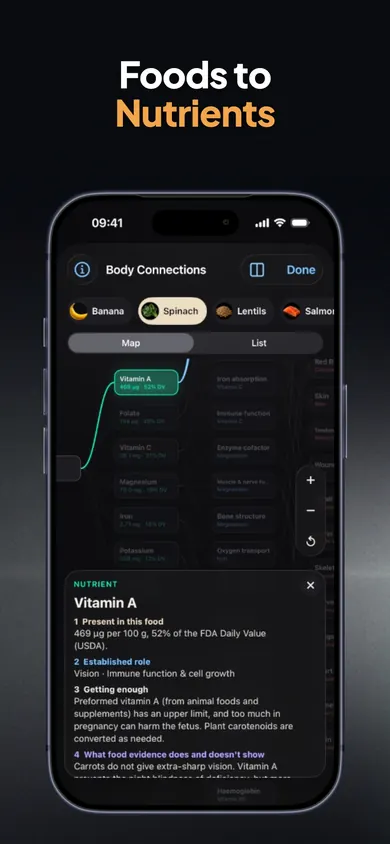
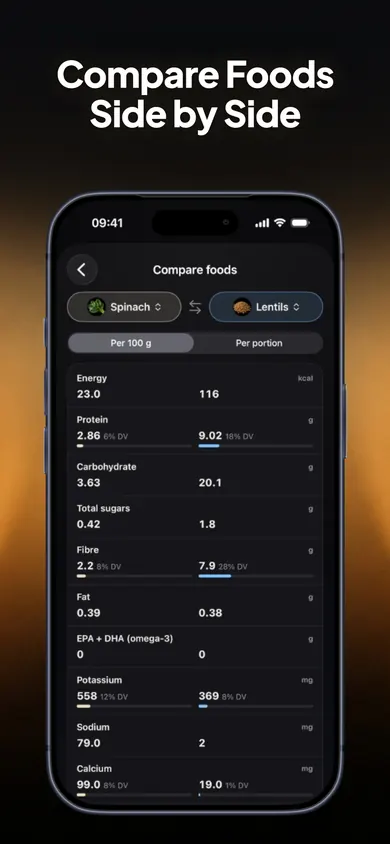
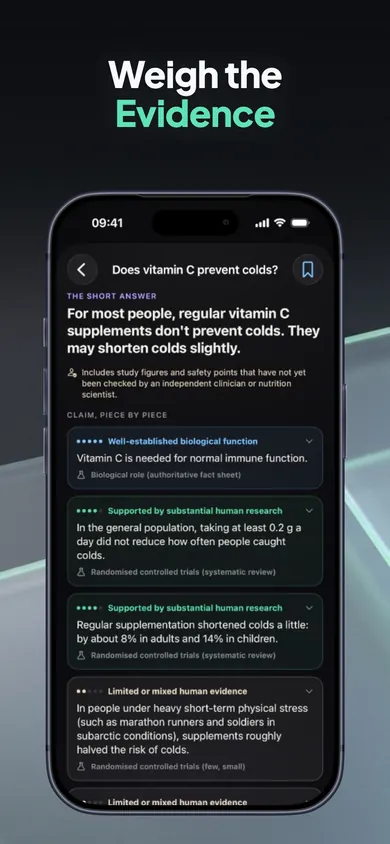
A mini story from the vitamin aisle
A shopper stands in front of forty bottles holding a phone. In Body Unpacked she picks lentils, taps folate and sees what folate does and where. Then she opens the Evidence Lens and reads how strong the evidence is behind each claim. She leaves with lentils and a question for her doctor, not a bottle. One design decision we made for exactly this moment: we compare foods by what they contain, never by a health score, because a score would pretend to answer a question only your situation can.
Start on your iPhone
44 everyday foods, 14 nutrient journeys, 249 sourced topics. This is general information, not medical advice. Talk to your clinician.

Updated November 2026 · Start Body Unpacked on your iPhone
Related
- Body Unpacked: a human body and nutrition atlasFollow a food into your body: pick spinach, tap iron, see its job and where it happens. A sourced human body and nutrition app for iPhone.
- Vitamins and what they do: all 13 in five minutesAll 13 vitamins and what each one does, in plain English, sourced to NIH. Pick your situation to see which ones matter most for you.
- Which cold remedies actually work? Seven remedies, gradedCold season guide: vitamin C, zinc, honey, saline, antibiotics and more, each graded by what Cochrane, Mayo Clinic and the NHS actually found.
- Do you really need 8 glasses of water a day? Six claims flippedFlip six water claims to see what Mayo Clinic, the NHS and the research say: the 8x8 rule, coffee, food, pee colour and drinking too much.