Week 1
Notice
Log your top symptom each time it shows up. Add the time of day. Don't analyze yet.
 A 4-week tracking plan
Drag what bothers you most to the top. We'll shape your four weeks around it.
 Free on iPhone · Try it tonight
Two to four weeks of symptom notes is usually enough to show a pattern, plus the dates of your periods from the past few months if you still have them; there's no need to delay booking while you track. Mayo Clinic (2026) suggests keeping a journal of your menstrual cycles for the past few months and writing your symptoms down, specifically, before the appointment. The National Institute on Aging (2024) says perimenopause symptoms can last between two and eight years, so a month of notes is a snapshot, not a verdict.
Updated November 2026 · This is general information, not medical advice. Talk to your clinician.
Free and private. Hard to search, easy to forget at home, and you'll summarize it in the waiting room.
Always with you. No structure: dates, symptoms and questions end up in one long scroll.
One tap saves a symptom with its date and time. Search by date, then turn chosen notes into a one-page visit brief. Free, no account.
Any of the three works for a four-week challenge. The best diary is the one you'll still open on day 19.
Pick a date three to five weeks out. Tracking fills the gap; it isn't a reason to wait.
Note a symptom when it happens, with a few words. Skip quiet days without guilt.
The night before, pick your main concern and up to three questions. Bring that page.
Week 1
Log your top symptom each time it shows up. Add the time of day. Don't analyze yet.
Week 2
Note sleep, stress and anything new, including symptoms that seem unrelated. Write down every medicine and supplement you take.
Week 3
Did something shift? A new treatment, a different pattern? Mark it with the date so later notes don't blur it.
Week 4
Write three questions. Mayo Clinic suggests ones like “What's causing my symptoms?” and “What kinds of tests do I need?”
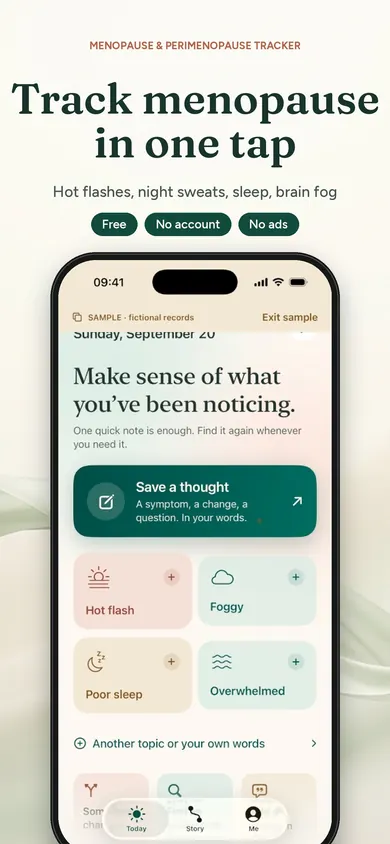
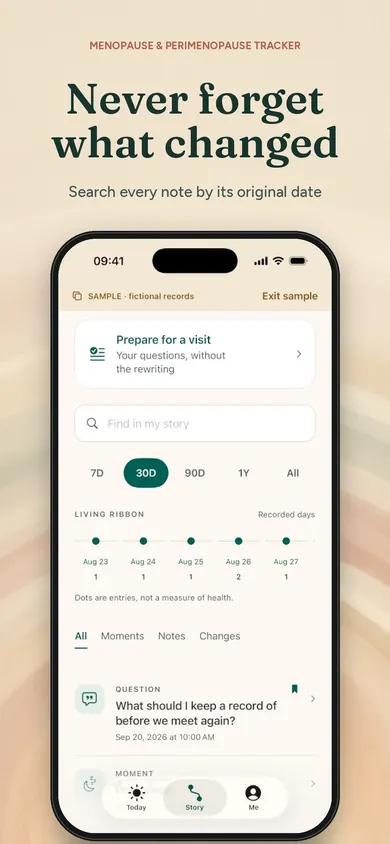
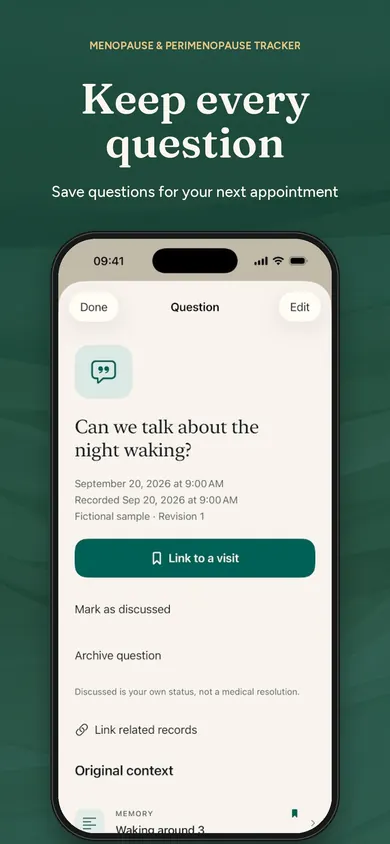
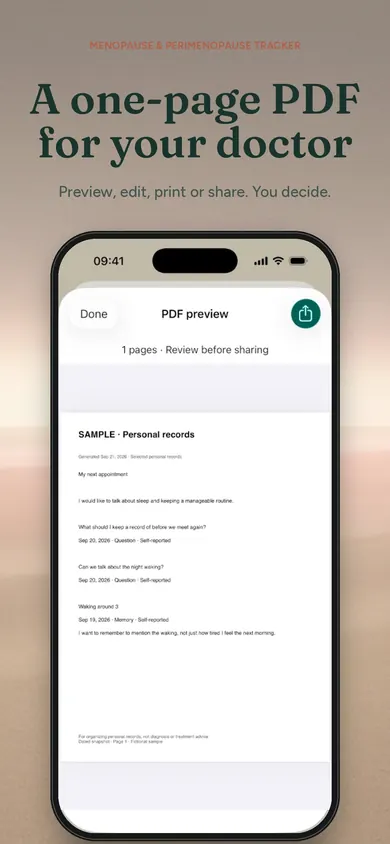
The plan at the top puts your most bothersome symptom in charge of week one, because that's the one you'll want to describe precisely. If you ranked period changes first, we suggest gathering cycle dates from the past few months as Mayo Clinic recommends. If you ranked night sweats or poor sleep first, logging at 3 a.m. matters: My Midlife Story keeps one-tap buttons large, and Low-Capacity mode shows calmer controls with one main action at a time.
One design decision we made: the app has no streaks. A break never removes progress, and points never depend on how you feel. A tracking challenge that punishes a bad week would measure your discipline, not your symptoms.
If you have bleeding after 12 months without a period, palpitations, or bleeding much heavier than usual, the NHS (reviewed May 2026) says to contact your GP. Book now rather than tracking first.
Two to four weeks of symptom notes is usually enough to show a pattern, and if you still have periods, bring the dates from the past few months; Mayo Clinic (2026) suggests keeping a journal of your menstrual cycles for the past few months. You don't have to wait to book: the NHS (reviewed May 2026) says to contact your GP if you think you have symptoms and want to know your options.
Mayo Clinic suggests writing down any symptoms, being specific, including ones that seem unrelated, and noting major stresses or recent life changes. List all medicines and supplements too. A date and a few words per note is plenty.
No. Log when something is worth remembering: a hot flash in a meeting, a night you woke three times, a day of brain fog. In My Midlife Story, missing days stay unknown rather than being counted as symptom-free.
The NHS (reviewed May 2026) lists reasons to contact your GP, including palpitations, bleeding that is heavier than before, or any vaginal bleeding after 12 months without a period. Don't hold these back to finish a tracking challenge.
There is no single test. Mayo Clinic (2026) says hormone testing isn't usually helpful to know if you're in perimenopause; your symptoms, cycle history and age matter more. The WHO (2024) notes natural menopause is confirmed after 12 consecutive months without a period.
Yes. A notebook with the date, the symptom, and one line about the day works. An app helps when you want to search by date or turn notes into a one-page summary without retyping.
Tap the first symptom you notice. In four weeks, walk in with one clear page.