For husbands and partners who keep hearing new words at home. Plain meanings, cited sources, one kind move each.
0 of 12 terms
Perimenopause
Tap the button to read the first term. Each tap ticks one off.
Free on iPhone and iPad · no account
What do menopause terms mean, in plain English?
Most of the words cluster around three ideas: perimenopause (the years of change), menopause (12 months with no period) and the symptoms and treatments in between; learn those and the rest will make sense when you hear it.
Dear partner, this page is for you. Someone you love may be saying words like vasomotor and progestogen and you're nodding along. We built it so you can stop nodding and start understanding, with each meaning taken from the NIH, the NHS or Mayo Clinic and linked so you can read more. Understanding the words is the cheapest form of support there is.
From the team at Honest Little Apps
What she might be using to keep track
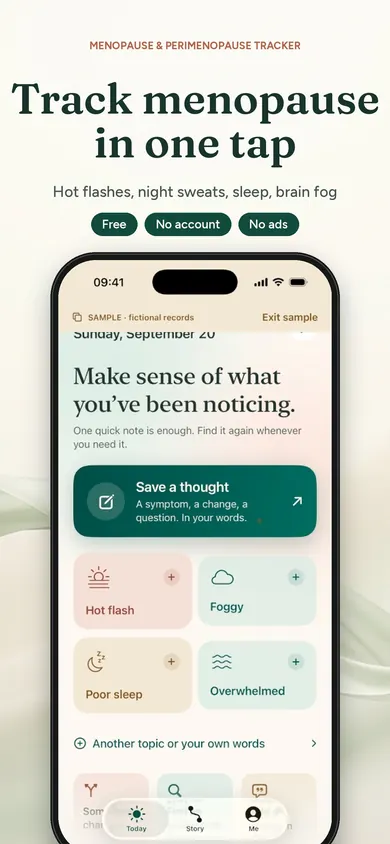
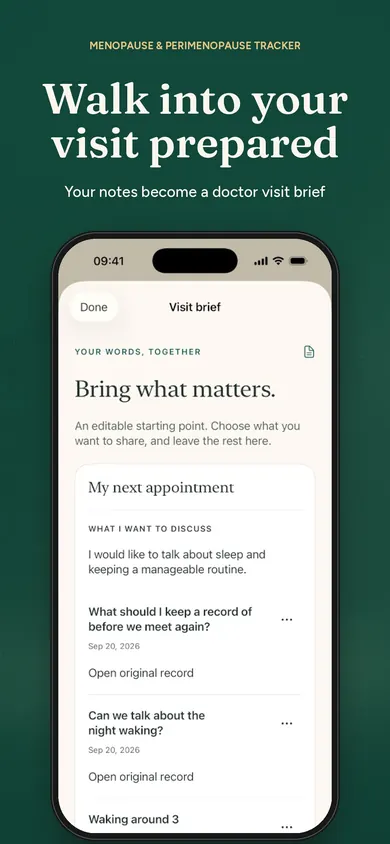
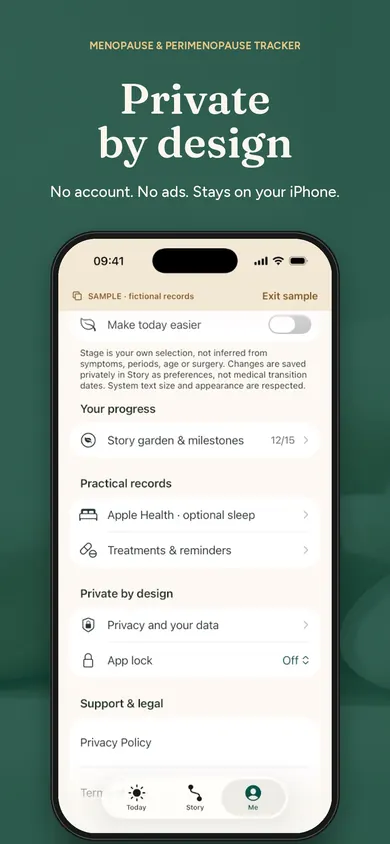
We make My Midlife Story, a private tracker for perimenopause and menopause. These are its real App Store screens. If she uses it, the notes are hers: no account, nothing uploaded, shared only if she decides.
One tap for a hot flash, foggy or poor sleep.A one-page visit brief she edits herself.Private by design: no account, app lock optional.
Perimenopause vs menopause vs postmenopause
StageWhenPeriods
PerimenopauseUsually starts 45 to 55; can last yearsChange, then fade
MenopauseAfter 12 months without a period; US average age 52Stopped
Tick a word once it makes sense. The ring at the top keeps count. Ticks stay on this page only.
The years before periods stop for good. The NIH National Institute on Aging (2024) says it usually starts between 45 and 55 and related symptoms can last two to eight years.
Say: "Is this a perimenopause thing, or just a bad week? Either way, what would help?"
Confirmed only after 12 months with no period, per the NIH National Institute on Aging (2024). Average age in the US is 52. So it is one day on a calendar, not a whole era.
Avoid: "So you're in menopause now?" in month three.
The years after that 12-month mark. The NIH National Institute on Aging (2024) notes the risk of heart disease, stroke and osteoporosis goes up after menopause.
Useful: knowing why her doctor may bring up bone and heart checks.
A sudden feeling of heat, mostly in the upper body and face, lasting 30 seconds to 10 minutes and happening from once a week to several times an hour (NIH National Institute on Aging (2024)). "Flush" is the UK word.
Do: open a window without making it an event.
Hot flashes that happen at night (NHS (2026)). They can wake both of you.
Do: a spare pillowcase on the nightstand, a fan on her side.
The clinical name for hot flashes and night sweats together, per the NIH National Institute on Aging (2024). You'll see it on prescriptions and in studies.
Translation: "VMS" means the hot ones.
Problems with memory or concentration, which the NHS (2026) lists among menopause symptoms.
Avoid: "You already told me that." Try: "Want me to put it in the calendar?"
Periods stopping before 45. Before 40 it is called premature menopause (NHS (2025)).
Useful: it is a real diagnosis, not a compliment about age.
Hormone replacement therapy. Mayo Clinic (2026) calls systemic estrogen the best treatment for hot flashes and night sweats; people with a uterus also need a progestogen.
Don't: weigh in on doses. That's between her and her prescriber.
The hormone given with estrogen to protect the womb lining, as Mayo Clinic (2026) describes. Side effects can include headaches, breast tenderness and mood changes (NHS (2023)).
Useful: the early weeks can be bumpy. The NHS says side effects usually improve.
Genitourinary syndrome of menopause: dryness, burning, urinary urgency and painful sex, as Mayo Clinic (2025) describes. Very common, often unmentioned.
Do: let her bring it up. Don't take it personally.
Treatments without estrogen. Mayo Clinic (2026) lists SSRIs, fezolinetant, elinzanetant, oxybutynin and gabapentin for hot flashes.
Useful: if HRT isn't right for her, there are other routes to ask about.
This is general information, not medical advice. Talk to your clinician.
Honest limits
This glossary is ours. My Midlife Story has no partner mode and no shared account.
The app does not diagnose, recommend treatment or doses, or say one thing caused another.
Free covers logging, search, visit briefs and PDF export; Premium adds deeper organization. Records are never hidden if Premium ends.
A made-up Sunday, after the glossary
He'd read the twelve words on Thursday. On Sunday she said the night sweats were back and she'd forgotten to mention it at her last appointment. Before, he'd have said you should tell the doctor. This time he said, "Want to note it now so it's on the list?" She logged it in one tap. That was all. The best support is often a single, well-timed question.
How to use this with your partner, in 3 steps
Read it alone first. Ten minutes, no quiz. You're learning the language, not preparing a lecture.
Ask one question. "Which of these is the hardest for you right now?" Then listen.
Offer, don't install. If she wants a tracker, mention My Midlife Story. If not, drop it. It's her story.
Partners' questions about menopause
What is the difference between perimenopause and menopause?
Perimenopause is the transition, often lasting several years; menopause is the point you reach after 12 months with no period, according to the NIH National Institute on Aging (2024). Most of the symptoms partners notice happen in perimenopause.
How long do menopause symptoms last?
The NHS (2026) says symptoms usually last 7 to 9 years, sometimes longer, and can change over that time. Joint pain and vaginal dryness may continue after menopause.
Is there a test that shows she is in perimenopause?
Mayo Clinic (2026) says there is no single test or symptom, and hormone testing usually isn't helpful because levels change unpredictably. Clinicians look at age, menstrual history and symptoms.
Should I go to her menopause appointment?
Only if she asks you to. If she does, your job is to help remember, not to talk. A written list of what changed and what she wants to ask helps both of you.
What can a partner actually do?
Learn the words, notice without diagnosing, take one practical job off her list, and let her decide what to share. The glossary above has one small move per term.
Is My Midlife Story free?
Yes for the core: one-tap logging, history, search, visit briefs, PDF export, reminders, encrypted backup and deletion are free with no account. Optional Premium (monthly or annual) adds comparisons, Replays, advanced briefs and more.
Try it tonight
If she wants a private place for notes and questions, she can try it tonight. Free, no account.
Your first week on HRT: what to expectJust started HRT for menopause? What the NHS says about the first weeks, a date calculator for your 3-month check-in, and a 7-day note plan.