Dear you,
If you are reading a symptom checklist at midnight, something has probably changed: a heavier period, a 3 a.m. wake-up that has become a habit, a word that vanished mid-sentence at work. You may not know whether it is perimenopause. That is fine. A checklist is not a diagnosis; it is a way to stop carrying it all in your head.
What should be on a perimenopause symptom checklist?
A useful perimenopause symptom checklist covers period changes, hot flushes and night sweats, sleep, brain fog, mood, palpitations, aches, skin and hair changes, and vaginal and bladder symptoms, with room to note how often and how much each one bothers you. Ours uses the 22 trackable symptoms on the NHS menopause symptoms page (2026), grouped the way people tend to describe them.
Why bother with paper? Mayo Clinic (2026) says tests most often aren't needed to diagnose menopause, and hormone levels go up and down in perimenopause. Your own record of what happened, and when, is often the clearest thing you can bring.
This is general information, not medical advice. Talk to your clinician.
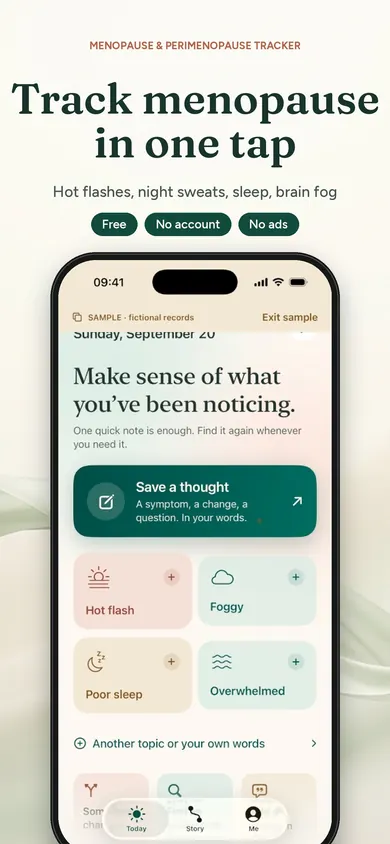
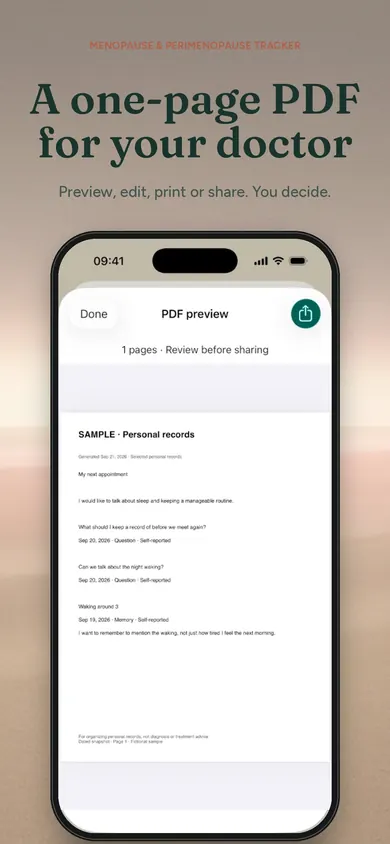
Proof: the same idea in the app
Honest limits of any checklist
- Many of these symptoms can have other causes; Mayo Clinic (2026) notes doctors sometimes check thyroid-stimulating hormone (TSH) as well. A tick is a question for your doctor, not an answer.
- A single checklist is a snapshot. Patterns over weeks tell your clinician more, which is why page two is a 4-week tracker.
- The list is based on the NHS page; your clinician may ask about things that are not on it.
- Some symptoms need prompt care: the NHS advises seeing a doctor about any vaginal bleeding after 12 months without a period.
How to use it in 3 steps
- Tick tonight. Everything you have noticed in the last three months, with how often and how much it bothers you.
- Track four weeks. Put your top six symptoms on page two and mark 0 to 3 each day. Blanks stay blank.
- Bring it. Write your main concern and up to three questions, most important first, as Mayo Clinic (2026) suggests.
Paper checklist or symptom app?
| This PDF | My Midlife Story | |
|---|---|---|
| Cost | Free | Free core; optional Premium |
| Logging | Pen, daily grid | One tap, with time stamp |
| Before the visit | Bring the pages | Editable one-page brief and PDF |
| Privacy | Stays on paper | On your device, no account |
| Best for | One appointment soon | Months of changes |
We make My Midlife Story, so we are biased; the paper version is genuinely enough for many first appointments.
Your tally, and what to do with it
Tick boxes above and your tally appears here, ready to print.
Whatever the number, circle your top three. Three clear symptoms with dates are easier to discuss in a ten-minute appointment than twenty without. The NHS notes symptoms usually last 7 to 9 years and can change, so keep the blank PDF and print a fresh copy each season.
Questions people ask first
What symptoms should be on a perimenopause checklist?
The NHS menopause symptoms page (2026) lists changes to periods, hot flushes, night sweats, sleep problems, brain fog, memory and concentration problems, mood changes, palpitations, headaches, joint and muscle aches, weight gain, skin, hair and mouth changes, vaginal and bladder symptoms and reduced sex drive. This checklist covers all 22 trackable items from that list.
How do I know if I'm in perimenopause?
Most people notice changes to their periods plus other symptoms on the list. Mayo Clinic (2026) says tests most often aren't needed to diagnose menopause, and hormone levels go up and down during perimenopause, which makes blood tests hard to read. Your symptoms over time are usually the most useful evidence.
At what age does perimenopause usually start?
Menopause usually happens between 45 and 55, says NHS (2026), but it can happen earlier, and perimenopause symptoms often begin before your periods stop.
How long do perimenopause symptoms last?
The NHS menopause symptoms page (2026) says symptoms usually last 7 to 9 years, sometimes longer, and can change over time.
When should I see a doctor about these symptoms?
The NHS menopause symptoms page (2026) suggests a GP visit if you think you have perimenopause or menopause symptoms and want to know your options, if you have palpitations, or if your periods are heavier than before. See a doctor about any vaginal bleeding after 12 months without a period.
Is the printable free? Do I need to sign up?
Free, no sign-up. It is a two-page PDF, US Letter: the checklist on page one and a 4-week tracker with room for questions on page two.
Can I track this on my phone instead?
Yes. My Midlife Story logs symptoms in one tap and turns the notes you choose into a one-page visit brief and PDF. Logging, search, visit briefs and PDF export are free with no account; optional Premium adds comparisons, Replays and extra garden looks.
Make it a habit with My Midlife Story when paper gets tiring. One tap, private, no streaks to lose.

Make it a habit with My Midlife Story on the App Store · Free PDF · Updated November 2026
With care,
Honest Little Apps
Related
- My Midlife Story: the menopause tracker that writes your visit briefLog hot flashes, night sweats, sleep and brain fog in one tap, then take a one-page visit brief to your doctor. Free and private on iPhone.
- How long does perimenopause brain fog last?How long perimenopause brain fog lasts, what research found about memory after menopause, and when to see a doctor. Count your foggy moments here.
- Am I too young for perimenopause?Symptoms in your 30s or early 40s? What NHS, Mayo Clinic and NIA say about age, flip six myths, and plan what to bring to your appointment.
- Best free menopause tracker app: six compared before your year-end visitSix menopause tracker apps checked against their App Store listings in November 2026: what is free, doctor reports, accounts and tracking labels.