
How long does perimenopause brain fog last?
Usually for part of the menopause transition, not forever: research suggests memory and learning dip during perimenopause and recover after menopause, but no one can give you an exact end date. The NHS (2026) says menopause symptoms usually last 7 to 9 years, sometimes longer, and change over time. Brain fog may come and go inside that window.
This is general information, not medical advice. Talk to your clinician, especially if memory changes are new, getting worse or worrying you.
How to track brain fog in 3 steps
- 1Tap when it happens. A lost word, a forgotten reason for walking into a room. One tap saves Foggy with the date and time.
- 2Add the context once in a while. Poor sleep last night? A hot flush in the meeting? Those taps sit on the same timeline.
- 3Bring the pattern, not the panic. Pick the notes for a one-page visit brief. Every line links back to the original note.
Brain fog over the menopause transition
What the sources say, stage by stage. A timeline, not a forecast.
- Before the transition
Most women begin the menopausal transition between 45 and 55, per the National Institute on Aging (2024). Signs can come earlier: Mayo Clinic (2026) says some notice changes in their 30s.
- Early perimenopause
Periods start to change. In the SWAN study, Neurology (2009) (figures from the American Academy of Neurology release, 2009), gains in verbal memory on repeat testing were 29% as large as in premenopause.
- Late perimenopause
The dip was deepest here: verbal memory gains were 7% and processing speed gains 28% of premenopause levels in that study.
- After menopause
Menopause is 12 months with no period (National Institute on Aging (2024)). In the same study, learning returned to premenopausal levels in the postmenopausal stage.
The research points to a dip, not a decline.
Perimenopause brain fog vs memory problems to check
| More like everyday fog | Talk to a doctor soon |
|---|---|
| Losing a word, then finding it later | Asking the same questions over and over |
| Losing things from time to time | Misplacing things often and not being able to find them |
| A bad decision once in a while | Poor judgments and decisions a lot of the time |
| Foggy after a bad night | Getting lost in places you used to know well |
Adapted from the National Institute on Aging (2023), which also says: if memory problems persist after a few weeks, talk with your doctor.
A made-up month of counting
Week one, nine foggy taps. Most of them land after 2 p.m. Three follow nights marked Poor sleep.
Week three, the count is lower, but two hot flashes sit right before two foggy moments in a work meeting.
At the appointment, that's the question on the page: "Could my sleep and hot flashes be making the fog worse?" It's a better question than "Is something wrong with my brain?", and it took ten seconds a day to get there. Counting turns a vague worry into a question a clinician can answer.
What the counter above is doing
Each tap stores a time of day in your browser only and groups it into morning (5 a.m. to noon), afternoon, evening (5 to 10 p.m.) or night. Once you have five taps, it tells you where most of them fall. That's all. It doesn't send anything anywhere and it isn't a test.
- Useful for: spotting whether fog clusters at one time of day.
- Not useful for: deciding whether it's perimenopause, or anything else. That's a clinician's job.
- In the app: My Midlife Story keeps the same kind of note with its date, lets you filter by 7, 30 or 90 days, and keeps every note even if you skip weeks. Missing days stay unknown, not symptom-free.
One limitation worth saying plainly: neither this page nor the app can measure memory. They record what you noticed.
Foggy, saved in one tap
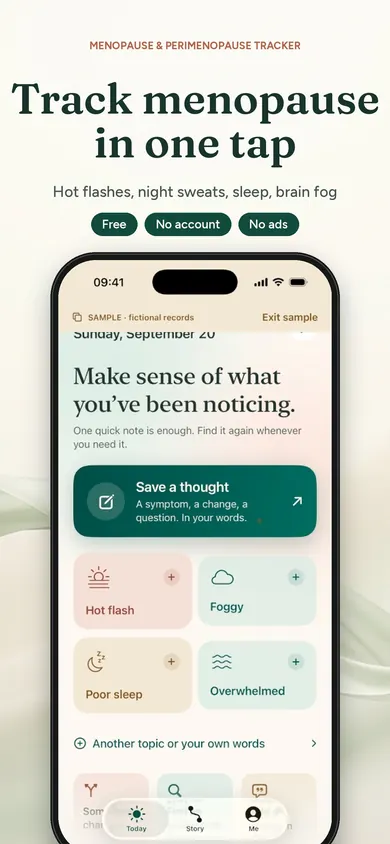
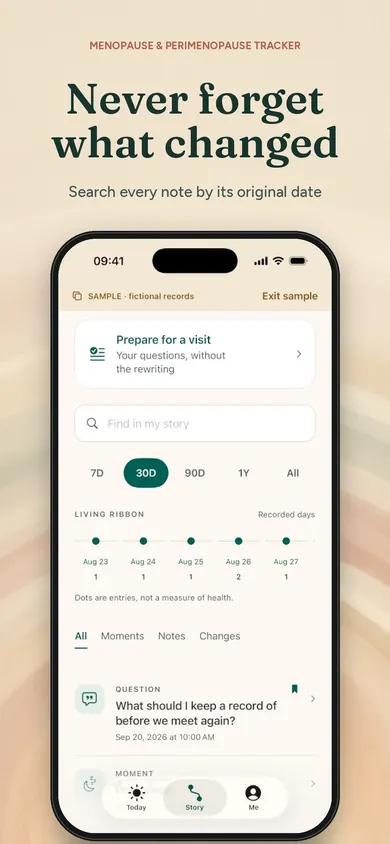
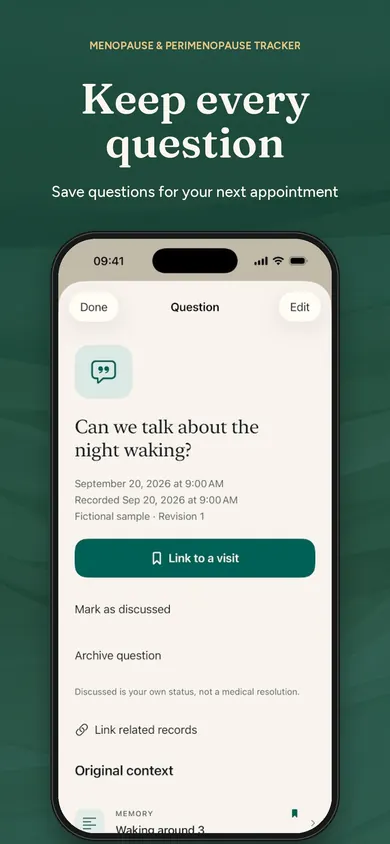
Who should pick something else: if you want a brain-training game or a memory test, this isn't that. If you want an app that explains your symptoms, also not this. My Midlife Story is a private notebook with a good memory.
Brain fog questions, answered
How long does perimenopause brain fog last?
There's no fixed length. The NHS (2026) says menopause symptoms usually last 7 to 9 years, sometimes longer, and change along the way. In the SWAN study, Neurology (2009), learning dipped during perimenopause and returned to premenopausal levels after menopause.
Is brain fog a real perimenopause symptom?
Yes. The NHS (2026) lists problems with memory or concentration under perimenopause symptoms, and the National Institute on Aging (2024) mentions forgetfulness and difficulty concentrating.
Does brain fog get better after menopause?
For many, it seems to. In the SWAN study, Neurology (2009) of 2,362 women aged 42 to 52 followed for four years, the amount of learning improved back to premenopausal levels in the postmenopausal stage. Every person is different.
When should I worry about memory problems?
The National Institute on Aging (2023) says to talk with your doctor if memory problems persist after a few weeks, and lists signs like asking the same questions over and over or getting lost in places you know well.
What should I tell my doctor about brain fog?
Mayo Clinic (2026) suggests writing down your symptoms, being specific, including ones that seem unrelated, and bringing a list of questions. Note when the fog happens and what else was going on: sleep, hot flushes, stress.
Can poor sleep cause perimenopause brain fog?
Sleep problems are a common perimenopause symptom in their own right, per Mayo Clinic (2026), and a bad night can make anyone foggy. Logging sleep next to foggy moments helps you and your clinician see if they travel together.
Can My Midlife Story tell me why I'm foggy?
No. It records your notes with dates and times, lets you search them, and turns the ones you pick into a one-page visit brief. It never says one thing caused another.
Is My Midlife Story free?
The core is free with no account: one-tap logging, history, search, visit briefs, PDF export, reminders and encrypted backup. Optional Premium adds comparisons between periods, grouped Replays and advanced briefs.
Start on your iPhone
Tap when the fog rolls in. Bring one page to your next visit. Start on your iPhone, free, no account.

Start My Midlife Story on your iPhone · Updated November 2026
Related
- My Midlife Story: the menopause tracker that writes your visit briefLog hot flashes, night sweats, sleep and brain fog in one tap, then take a one-page visit brief to your doctor. Free and private on iPhone.
- Am I too young for perimenopause?Symptoms in your 30s or early 40s? What NHS, Mayo Clinic and NIA say about age, flip six myths, and plan what to bring to your appointment.
- Best free menopause tracker app: six compared before your year-end visitSix menopause tracker apps checked against their App Store listings in November 2026: what is free, doctor reports, accounts and tracking labels.
- Menopause terms explained for partnersA plain-English menopause glossary for husbands and partners: 12 words you'll hear, sourced from NIH, NHS and Mayo Clinic. Tick off each one.