How do you find a menopause specialist?
Start with your GP or primary care doctor, ask directly about a specialist referral if treatment isn't working or your history is complicated, and in the US search The Menopause Society's practitioner directory by ZIP code or telehealth. Bring a short written record of your symptoms so the first visit is not spent remembering.
Many people assume menopause care ends with the last period. It does not have to. NHS (2026) says symptoms usually last 7 to 9 years, sometimes longer, and some, like joint pain and vaginal dryness, can continue after menopause. If you are years past your final period and still struggling, it is a reasonable thing to raise.
This is general information, not medical advice. Talk to your clinician.
Proof: arrive with your notes in order
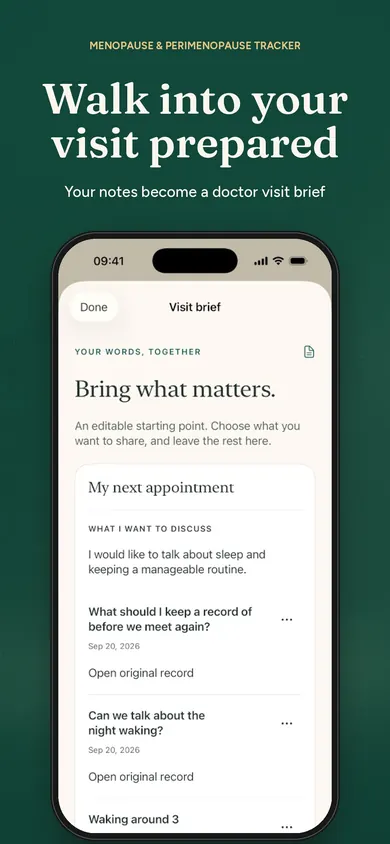
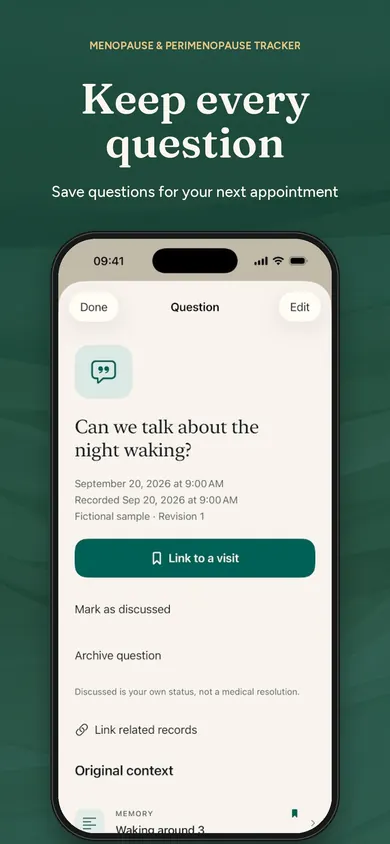
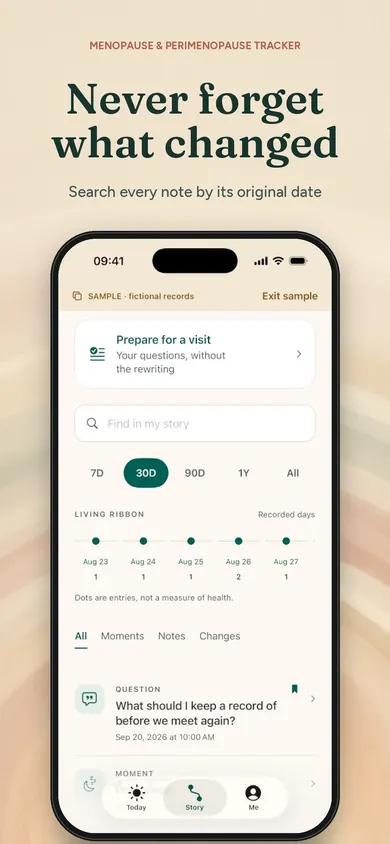
A specialist appointment is often short and hard to get. Our app, My Midlife Story, exists for the part you control: what you bring.
Menopause specialist questions
What is a menopause specialist called?
In the US you will often see MSCP, short for The Menopause Society Certified Practitioner. They can be physicians, nurse practitioners, physician assistants, pharmacists and other clinicians. In the UK, specialist care usually means a hospital-based specialist menopause service or clinic.
Do I need a referral to see a menopause specialist?
In the UK, usually yes: specialist menopause clinics generally take referrals from GPs. The Leeds Teaching Hospitals NHS menopause clinic (2024) says most people can be treated by their GP, who can ask the clinic for advice or refer you. In the US it depends on your insurance plan, so check before you book.
Can I see a menopause specialist by telehealth?
In the US, The Menopause Society's Find a Menopause Practitioner directory has a telehealth search by state, alongside search by ZIP code and by country.
Is it too late to get help years after menopause?
Not necessarily. NHS (2026) says symptoms usually last 7 to 9 years, sometimes longer, and that some, such as joint pain and vaginal dryness, can continue after menopause. Lingering symptoms are worth raising.
What should I bring to a menopause appointment?
Mayo Clinic (2026) suggests a log of your symptoms (how often and how severe), a full list of medicines, herbs and supplements with doses, your questions written down with the most important first, and a friend or family member if possible.
When is a symptom after menopause urgent?
NHS (2026) advises seeing a GP about any vaginal bleeding if you have not had a period for 12 months or more, even if it is light or happened once.
Can an app replace a menopause specialist?
No. My Midlife Story, which we make, organizes your own notes and questions and turns them into a one-page visit brief. It does not diagnose, recommend treatment or doses, or say one thing caused another.
Who can help with menopause symptoms, compared
| Who | Good for | How to reach them |
|---|---|---|
| GP or primary care doctor | First assessment, most treatment, referrals | Your usual practice |
| Gynecologist | Bleeding, pelvic and vaginal symptoms | Direct or by referral, depending on your system and insurance |
| MSCP-certified practitioner (US) | Clinicians with menopause certification | The Menopause Society Find a Menopause Practitioner directory |
| Specialist menopause clinic (UK) | Complex history, or when your GP needs specialist advice | Usually by GP referral |
| Telehealth | Hard-to-reach areas, follow-ups | Directory telehealth search by US state |
The directory itself says it is not a complete list and is not an endorsement: it only includes members and certified practitioners who chose to be listed and are taking new patients.
A mini story: six years after the last period
Picture someone in her late fifties, six years past her last period. The hot flushes faded, but the night waking and joint aches never did, and each appointment ends with “that's just age.” This time she arrives with one page: the nights she woke over the past month, three questions written in order, every supplement she takes, and a direct ask: “Would a menopause specialist be worth it for me?” She may still get the same answer. But now it is a decision her doctor makes with the facts in front of them, not a guess.
A clear page turns “just age” into a real conversation.
How it works in 3 steps
- Log what is still happening. Two to four weeks of notes: symptom, date, how bad. Missing days stay unknown, not symptom-free.
- Write your three questions. Most important first, including “Should I see a specialist?”
- Book the right door. GP first; if referred, or if you are in the US and want certified care, use the directory.
My Midlife Story covers the first two: one-tap symptom notes, a question list, and a one-page visit brief you can preview, edit, print or share only when you decide. Logging, search, visit briefs and PDF export are free with no account; optional Premium adds comparisons between periods, grouped Replays and extra garden looks.
Honest limits
- We cannot tell you whether you need a specialist. Only a clinician who knows your history can.
- Waiting times for UK specialist clinics vary by area, and US costs depend on your insurance; check before you book.
- Certification shows training and interest in menopause care. It is not a promise of the right fit for you.
- My Midlife Story is a notebook and planner, not a medical device. It never sends your records anywhere unless you share them.
Bring a better page
Get My Midlife Story free: log what's still happening, keep every question, and walk in with one clear page.

Get My Midlife Story free on the App Store · Updated November 2026
Related
- My Midlife Story: the menopause tracker that writes your visit briefLog hot flashes, night sweats, sleep and brain fog in one tap, then take a one-page visit brief to your doctor. Free and private on iPhone.
- Best free menopause tracker app: six compared before your year-end visitSix menopause tracker apps checked against their App Store listings in November 2026: what is free, doctor reports, accounts and tracking labels.
- Menopause symptom summary for your doctor, in 5 stepsFelt rushed at your last appointment? Build a one-page menopause symptom summary in 5 visual steps, with a copy-ready template. Free.
- How long to track menopause symptoms before your doctor visitTrack for 2 to 4 weeks, plus a few months of cycle dates if you still have periods. Sort your symptoms and get a 4-week tracking plan.