Dear traveler,
Nobody forgets their pills at home on a normal Tuesday. They forget on the Thursday the turkey goes in at six, the cousins arrive at noon and breakfast never quite happens. Holiday travel does not test your memory. It removes the cues your memory leans on.
How do you travel with medications over the holidays?
Pack every medicine in its original labeled container in your carry-on, bring extra for delays, carry copies of your prescriptions and ask your provider before crossing time zones. That is the short version of CDC travel guidance (2022), and it holds whether you are flying three time zones for Thanksgiving or driving two hours for Christmas Day (Friday, December 25, 2026).
Holidays do not break habits. They break the cues habits hang on.
The holiday medication checklist, in order
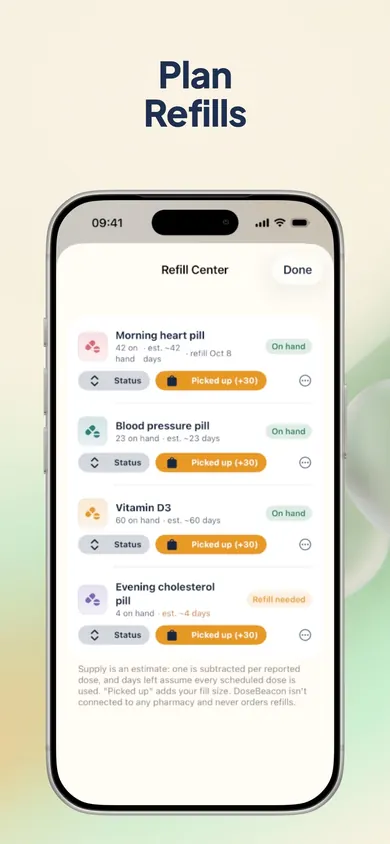
- A week out: count what is on hand and ask the pharmacy about an early refill if you will run short.
- Write one list of every medicine, vitamin and supplement, with amount, time and reason. Keep a copy in your wallet (National Institute on Aging (2022)).
- Copy your prescriptions with generic names; leave a second copy with someone at home.
- Pack labeled bottles in the carry-on or in the car with you, plus spare for delays.
- Ask about time zones before you leave, not at the gate.
- Pick one cue that travels: the first coffee, brushing teeth, a phone reminder.
Holiday medication travel questions
How should I pack medications for holiday travel?
Keep medicines in their original, labeled containers and pack them in your carry-on bag, so they are still with you if checked luggage is lost or delayed. Both points come straight from CDC travel guidance (2022). If you drive, the same logic applies: keep them in the car with you, not in a suitcase in the trunk you may not open until late.
How much extra medication should I bring?
Bring enough for the whole trip plus some spare in case of delays (CDC travel guidance (2022)). Snowstorms and cancelled flights are common at Thanksgiving and Christmas. Your pharmacist can tell you how much spare makes sense and whether an early refill is possible.
Do pills have to stay in their original bottles?
CDC travel guidance (2022) advises original, labeled containers, with labels that show your name, your provider's name, the generic and brand names and the dosage. If you use a weekly pill box during the trip, carrying the labeled bottles as well is the simplest way to match it to the label.
What if I cross time zones for Thanksgiving?
Ask your health care provider about any changes before you leave. CDC travel guidance (2022) notes that medicines are generally taken by the time since your last dose, not the local clock, but only your prescriber or pharmacist can say how that applies to your medicines.
What if I lose or run out of medicine while away?
Carry copies of your prescriptions with generic names, and leave another copy with a friend or relative at home (CDC travel guidance (2022)). Call your usual pharmacy first; they can often help you reach a pharmacy near where you are staying.
How do I remember doses when the holiday routine is upside down?
Anchor each dose to something that still happens, like the first coffee or brushing teeth, rather than to a meal that moves. The National Institute on Aging (2022) suggests keeping one written list of everything you take; bring a copy in your wallet. A reminder that rings on the phone itself helps when every day looks different.
A parent is staying with us for the holidays. How do we keep track?
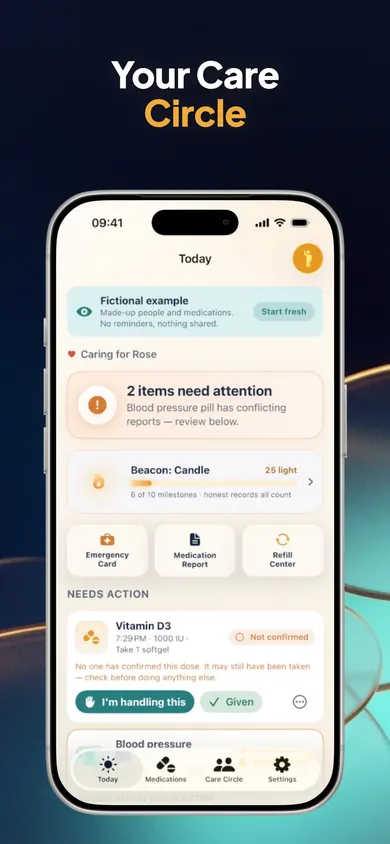
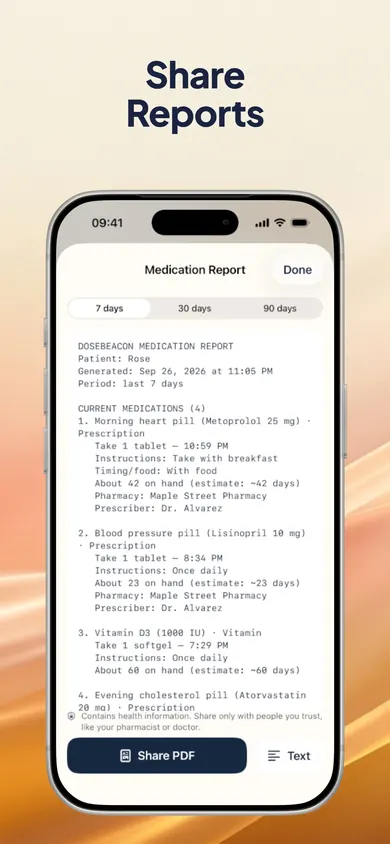
Start with one list of every medicine, vitamin and supplement, and agree on one person who hands out doses. DoseBeacon's Care Circle lets approved helpers see reported doses when phones are online, and the free plan includes one helper.
Do DoseBeacon reminders work without Wi-Fi?
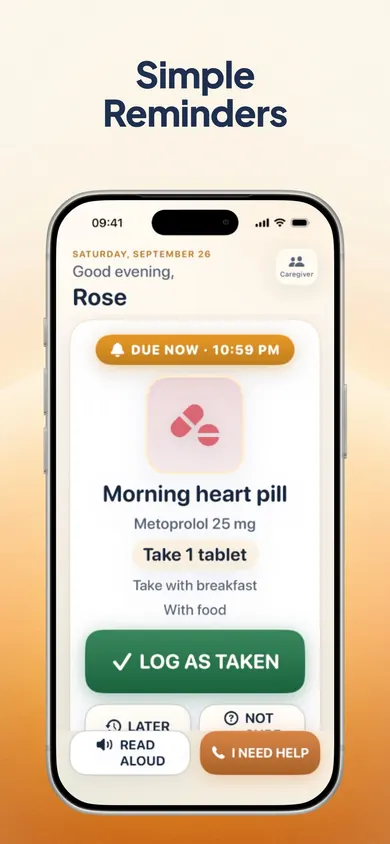
Yes. Reminders are scheduled on the device, so they work with no internet at a cabin or on a plane. Sharing with a Care Circle needs a connection, and every screen shows when it last updated.
Honest limits
- DoseBeacon is a reminder and record-keeping app, not a medical device. It does not give medical advice, recommend doses or adjust anything for time zones.
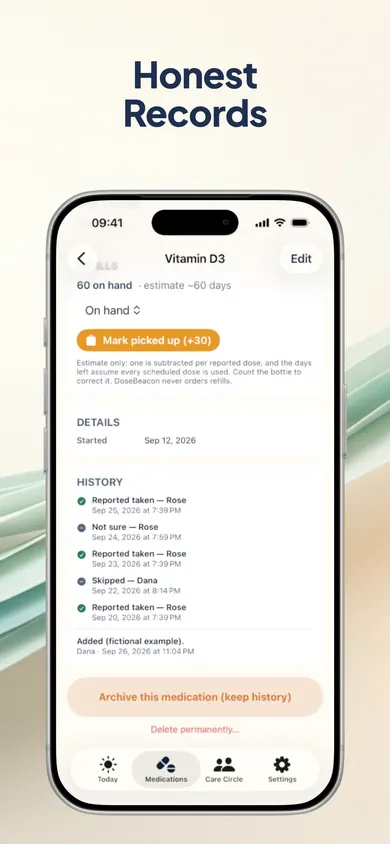
- A logged dose is a report, not proof a medicine was taken.
- Notifications depend on your phone's settings; a muted phone in a coat pocket stays muted.
- Free covers reminders, one patient, two active medications, one helper, full history, reports and the emergency card. More medications, more caregivers and the Dose Handshake need DoseBeacon Family ($8.99/month or $59.99/year, 7-day free trial for eligible new subscribers).
One design decision we made with travel in mind: medicine names are hidden on the lock screen by default, so a reminder on a phone left on the kitchen counter does not announce your prescriptions to the whole family.
A mini story: the 3 PM dinner
Thanksgiving dinner is called for 3 PM. The evening pill usually goes with dinner at 6. At 6 the reminder rings, everyone is on pie, and the plate that "counted as dinner" was three hours ago. The answer is tapped as Not sure, and a two-line text to the pharmacist the next morning clears it up for the rest of the trip. Nobody guessed. That is the whole point.
Who should pick something else
If you travel with one daily pill and a reliable morning routine, the labeled bottle and your phone's alarm will do. If your family uses Android phones, DoseBeacon will not work for them; it is iPhone and iPad only. If you need someone to physically hand out doses, ask about pharmacy blister packs, which no app replaces.
Make it a habit with DoseBeacon
Set it up before the suitcase comes out, and let the phone carry the cue the holiday takes away. This is general information, not medical advice. Talk to your clinician.

Updated November 2026 · Make it a habit with DoseBeacon on the App Store