Does vaping actually help with anxiety?
No: vaping mostly relieves the nicotine withdrawal that builds between puffs, so it feels calming while feeding the cycle that makes you anxious. The NHS (2024) describes that loop for smoking, and Smokefree.gov (accessed 2026) applies it to vaping: stress and anxiety are common triggers for vape cravings, and vaping is not a healthy way to handle them.
That does not make the anxiety imaginary. The racing chest before a hard meeting is real. It just means the vape is answering a question it helped ask.
A vape doesn't remove anxiety. It pauses the craving it created.
Vaping, stress and anxiety: questions people ask
Does vaping help with anxiety?
It feels like it, but the relief is mostly from easing nicotine withdrawal. The NHS (2024) explains that between doses, craving makes people feel irritable and anxious, and the next dose temporarily relieves that, so the better mood gets linked to nicotine. Smokefree.gov (accessed 2026) calls vaping "not a healthy way to deal with stress or anxiety".
Why do I feel calmer after I vape?
Because the craving that was building since your last puff stops for a while. The NHS (2024) describes this cycle for smoking: nicotine is likely to have caused much of the anxiety it then appears to relieve.
Will my anxiety get worse if I quit vaping?
It may rise for a while. Smokefree.gov (accessed 2026) says stress, irritability or anxiety can increase after quitting and that these mood changes are usually temporary while your body adjusts to being without nicotine.
Does quitting nicotine improve anxiety long term?
For smoking, yes on average: a Cochrane review by Taylor and colleagues (2021) of 102 studies found people who quit had greater reductions in anxiety than people who kept smoking, though the certainty for anxiety was rated low. Vaping-specific long-term studies are still limited.
What can I do instead of vaping when I'm anxious?
Smokefree.gov (accessed 2026) suggests stopping to breathe, moving your body, cutting down on caffeine, staying in the moment and reaching out to people who support you. Find the ones that work for you.
When should I get help for anxiety while quitting?
If the anxiety feels extreme, keeps going, or you have had severe anxiety before, talk to your doctor or a counselor (Smokefree.gov (accessed 2026)). For help right now, call or text 988. A provider may also suggest medication for withdrawal and cravings (CDC (2024)).
Who this page and CraveBreaker are not for
- Anyone in crisis. Call or text 988 now, or your local emergency number.
- People with an anxiety disorder looking for treatment. CraveBreaker is a self-help tool for adults, not medical advice or therapy. Talk to a doctor or counselor.
- Under-18s. teen.smokefree.gov is built for you.
- Anyone who wants an app to measure their body. CraveBreaker shows only what you record.
The tools behind the 20 seconds
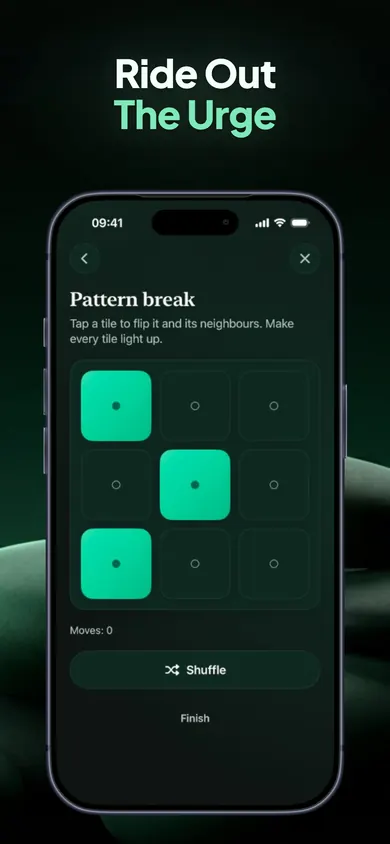
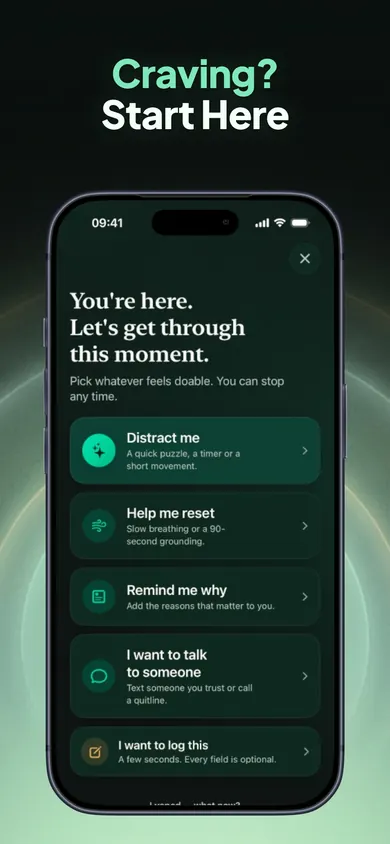
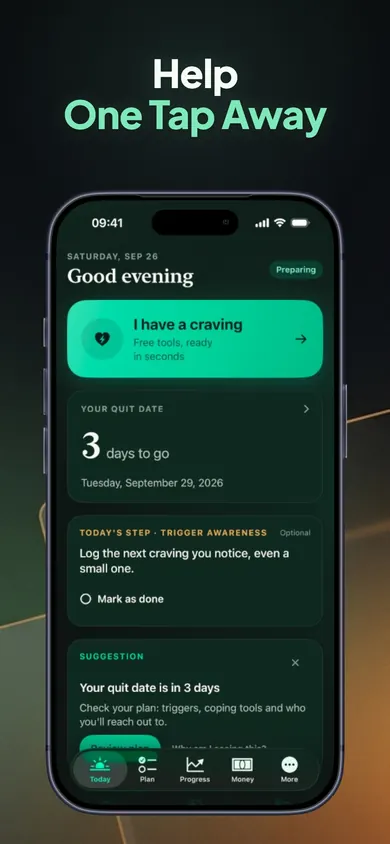
What the 20 seconds were for
The puzzle was never the point. A craving has a shape: it builds, peaks and fades, and Smokefree.gov (accessed 2026) notes cravings to vape fade the longer you stay quit. Twenty seconds of hands busy and eyes on tiles is a small rehearsal of riding one out. In CraveBreaker you can stretch that with a craving timer of 1, 3 or 5 minutes or your own length, stop early or add time.
If you log the moment afterwards (situation, intensity, what you tried, whether you vaped), patterns appear only once there is enough to be meaningful, and they are shown as observations, not causes. One design decision we made: the app never claims a puff caused your mood or that a tool cured it. It shows what you wrote down.
Vape break vs a 90-second reset
Vape break
- Switches off the craving for now
- Keeps the withdrawal loop running
- Costs money every week
90-second reset in CraveBreaker
- Slow breathing, then 5-4-3-2-1 grounding
- Free, offline, no account
- Your own reasons on screen afterwards
Honest limits: CraveBreaker has not been tested in a clinical trial. Its guides are based on Smokefree.gov and Health Canada guidance. Free covers every craving tool, your plan, log, journal and first 7 missions; Premium adds the full 66-day path and detailed insights. This is general information, not medical advice. Talk to your clinician.
Download free on the App Store
Keep the 20-second break in your pocket for the next time anxiety reaches for the vape.

Updated November 2026 · Download CraveBreaker free on the App Store · Free coaching: 1-800-QUIT-NOW · smokefree.gov
Related
- CraveBreaker: the quit vaping app for the next cravingA quit vaping app for the moment a craving hits: a 90-second reset, a craving timer and your own reasons. Every craving tool is free on iPhone.
- Am I addicted to vaping? A free 5-question quizFive yes-or-no questions built on Mayo Clinic's signs of nicotine dependence. Private, instant, free, and honest about what it can't tell you.
- Do quit vaping apps work? The evidence, dated and sourcedDo quit vaping apps work? A dated roundup of the trials and app reviews, what they found, and the five features worth checking before you download.
- Free help to quit vaping: find your route in 30 secondsFree quitlines, text programs and chat coaches for quitting vaping in the US and Canada, sorted by how you like to get help. Sourced, no sign-up.