Body Unpacked (ours)
- Best for
- Ages 12+, linking food to body
- Format
- Interactive graph, labs, evidence cards, 249 topics
- Last updated
- October 2026
- Offline
- Yes
For homeschool parents · ages 12 and up
For homeschoolers teaching the human body: trace one food into the body, the way the app does. Put the chain in order.
Drag (or use the arrows) so it reads food, then nutrient, then job, then body place.
 Free on iPhone · no account
For tweens and teens, pick an app that connects anatomy to something real, like the food on their plate, and that names its sources; Body Unpacked is built around exactly that chain.
Kids memorize "the small intestine absorbs nutrients" and forget it by Friday. They remember it when they followed their own lunch there. The chain above is the app's core move: spinach contains vitamin K; vitamin K is needed for blood clotting and healthy bones, per the {aK}; clotting happens in the blood. We make Body Unpacked, so read the comparison below with that in mind.
One food, one nutrient, one lab, one explanation. That is a lesson.
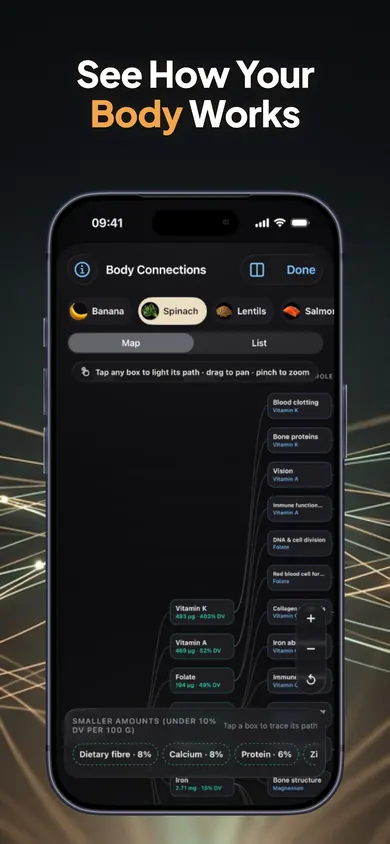
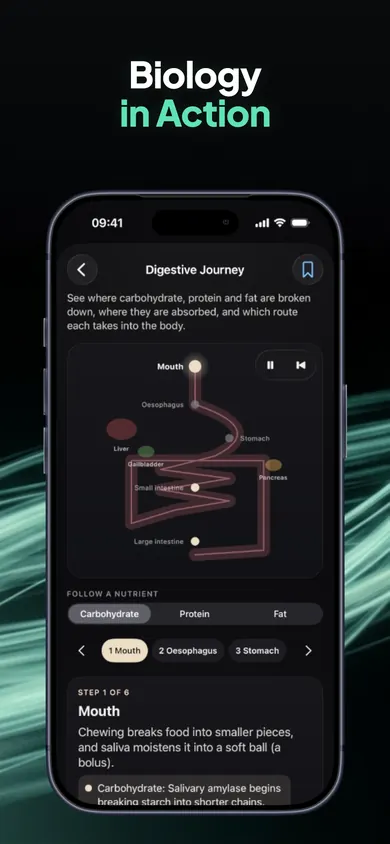
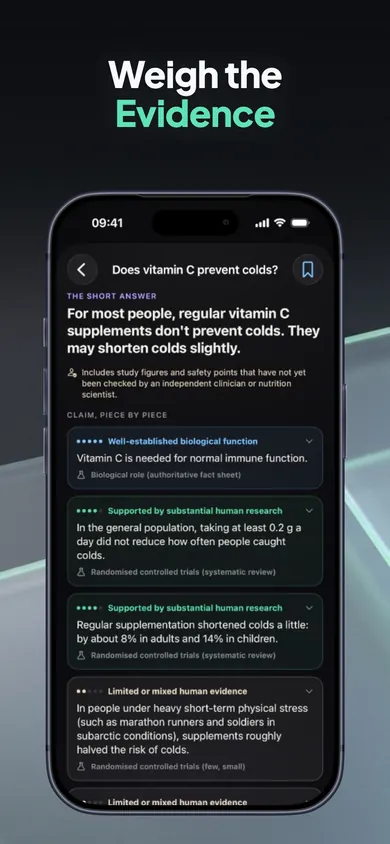
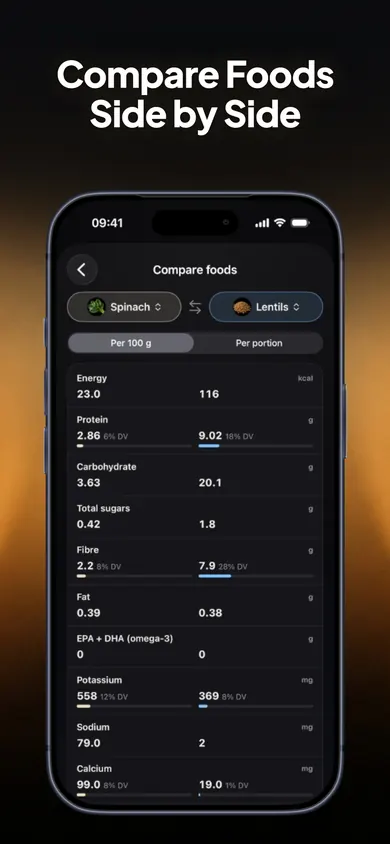
The Evidence Lens is the part older students argue with, which is the point.
A 13-year-old has decided vitamin C cures colds, because a cousin said so. Instead of arguing, the parent opens the Evidence Lens. The claim splits into separate statements: one labelled as a well-established role (vitamin C is needed for normal immune function), others labelled as substantial or limited evidence, each with its study type. Ten minutes later the student is explaining the difference between "prevents" and "shortens slightly". Nobody won the argument; the evidence did.
An invented example, built from the app's real Evidence Lens screen.
Checked against each app's current App Store listing on 3 November 2026. Links go to each maker's own site.
Who should pick what. Under 12, or want to build things with your hands: DIY Human Body, from UC Berkeley's Lawrence Hall of Science. Want to spin a 3D skeleton: High School Anatomy, though note its last update was in 2015. Want food, nutrients and evidence connected: Body Unpacked.
It is rated 12+ on the App Store and is written for curious teens and adults. Every topic switches between Simple, Standard and Deep dive, so a 12-year-old and a high-schooler can use the same page at different depths.
It is free to download. The App Store listing does not describe a subscription; if an in-app purchase is ever offered, the App Store shows it before you buy. There is no account, no ads and no analytics.
Yes. All learning content is bundled in the app, so lessons work in the car, at the library or anywhere without a connection.
No. It is a hands-on companion for the human body and nutrition parts of a course, with checkpoints but no grading, lesson calendar or teacher's guide. Pair it with your curriculum's reading and labs.
Food values come from USDA FoodData Central, and every claim in the app names its source. The content is checked by the developer against those public sources and has not been independently reviewed by a clinician.
One decision we made: no "healthier food" scores anywhere. Teens get enough food ranking elsewhere; we show what a food contains and let them reason.
Updated November 2026. This is general information, not medical advice. Talk to your clinician.
Get Body Unpacked free on the App Store. No account, no ads.