
How do you find a GLP-1 personal trainer near you?
Search local trainers, then check each one's certification for free on the U.S. Registry of Exercise Professionals, use a free consult to ask how they adapt for GLP-1 side effects and work with your prescriber, and agree on one simple measure of progress before you pay. There is no official “GLP-1 trainer” license, so the vetting is on you. This is general information, not medical advice. Talk to your clinician.
Updated November 2026 · Sturdy is for adults using prescribed weight-management medication under medical care.
Vetting a trainer near you, in 5 steps
- 1
Clear it with your prescriber first
Ask whether you have any limits on exercise right now, especially if you have a recent injury, dizziness or pain. Write the answer down; you'll hand it to the trainer.
- 2
Make a short list nearby
Search “personal trainer” plus your town, and ask your clinic, a local gym or community center who they refer people to. Three names is plenty.
- 3
Verify the certificate, free
Look each name up on the U.S. Registry of Exercise Professionals (USREPS). It lists professionals holding accredited certifications from member organizations including ACE, ACSM, NCCPT, NCSF and NSCA. Not on the list doesn't mean bad, but it's a question to ask.
- 4
Use the free consult to listen
Ask the questions behind the sorter above. Good trainers ask about your care team, start simple and plan a re-test. Red flags: dose advice, pushing through dizziness, selling supplements.
- 5
Agree on one number to watch
Pick something you can both measure, such as the CDC STEADI 30-Second Chair Stand (2017) (stand up and sit down as many times as you can in 30 seconds) or the load on one lift. Re-test on a set date.
A made-up first month
A 58-year-old on a prescribed GLP-1 medicine books a free consult at a gym ten minutes away. The trainer asks what her prescriber said, starts with chair squats, wall push-ups and a supported row, and writes down 9 chair stands as her starting point. She trains with him once a week and does two short sessions at home. Four weeks later she brings her home log, he re-tests, and they both look at the same numbers. The trainer coaches the hour; the record covers the other six days.
What you bring to each session
Sturdy is a planner and log for the days between sessions. It doesn't diagnose, treat or give medication advice. Here is what it shows, as the App Store screenshots do.
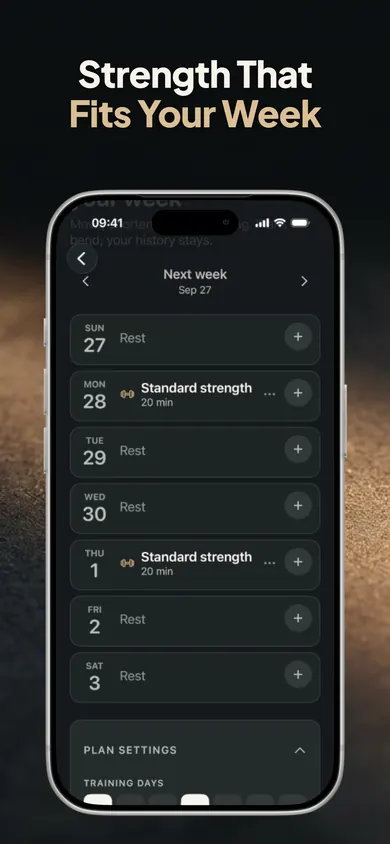 your home days
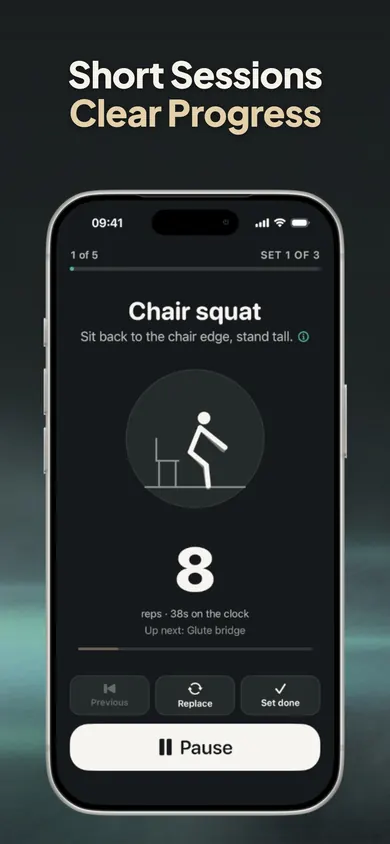 reps you logged
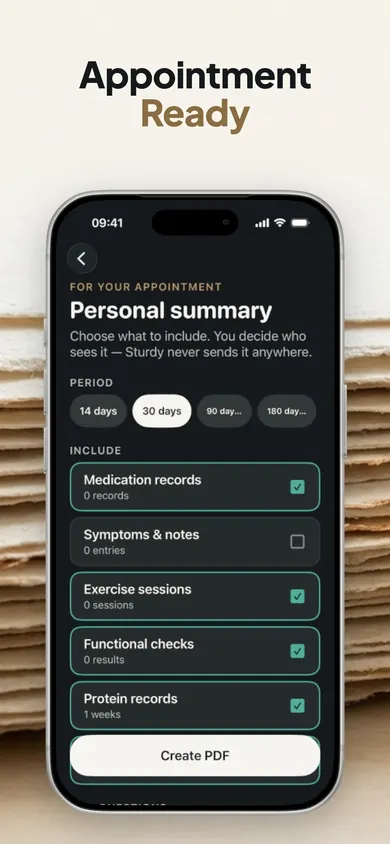 pick what to share
Who this guide is not for
- If you have a new injury, joint swelling, chest pain or dizziness, see your clinician before any trainer; a physical therapist may be the right first stop.
- If you want a supervised medical weight program, ask your prescriber about one; a trainer is not a substitute.
- If you already train confidently on your own, you may not need a trainer at all. The CDC adult activity guidelines (2023) and a simple log may be enough.
Protein and strength both show up in the joint advisory from four obesity and nutrition societies (2025) on supporting GLP-1 therapy; a trainer can help with the strength half. Sturdy's free tier covers weekly planning, all three workout types, sessions up to 30 minutes and protein logging. Sturdy Pro (weekly or yearly) adds gym-equipment movements, 45-minute sessions and longer progress views.
GLP-1 trainer questions
Is there such a thing as a GLP-1 certified personal trainer?
Some trainers advertise GLP-1 programs, but there is no single official GLP-1 credential. What you can verify is the trainer's general certification: the U.S. Registry of Exercise Professionals (USREPS) lets the public search for exercise professionals with accredited certifications from member bodies such as ACE, ACSM and NSCA.
Do I need a personal trainer while on GLP-1 medication?
No. Many people strength train at home with short, simple routines. A trainer helps most if you are new to lifting, have had injuries, or want someone to check your form. NIDDK (NIH, 2024) notes weight-management medicines work best combined with a lifestyle program that includes physical activity.
How often should I strength train on GLP-1?
The CDC adult activity guidelines (2023) recommend muscle-strengthening activity on 2 or more days a week that works all major muscle groups, for adults in general. Ask your clinician what is right for you.
What should I ask a trainer before booking?
Ask about their certification (then check it), how they adjust for nausea or low energy days, how they measure progress, and whether they will work alongside your prescriber. The sorter at the top of this page shows answers to listen for.
How much does a personal trainer cost?
Prices vary widely by city and setting, so we don't quote a number. Many gyms and trainers offer a free first consultation; use it to ask your questions before you pay for a package.
Can Sturdy replace a trainer?
No. Sturdy plans short sessions, guides 35 movements with easier and harder options, and logs your loads and protein. It cannot watch your form. Many people use it between sessions so they arrive with a clear record.
Play free on iPhone
Plan the days between sessions, log what you lifted, and take a clear summary to your next appointment.

Related
- Sturdy: strength and protein on GLP-1Sturdy plans short strength sessions and logs protein for adults on prescribed GLP-1 medication. Private, no account, free on iPhone.
- GLP-1 strength training for men: your first weekSkip the January overhaul. A first-week strength plan for men on a prescribed GLP-1: two 20-minute sessions, sourced from CDC and peer-reviewed work.
- GLP-1 strength training for women over 50: 10-point checklistOn a GLP-1 after 50? A 10-point strength checklist for muscle and bone, with NIH and CDC sources. Scratch a card, tick as you go. Free.
- GLP-1 workouts during the holidays: a 6-week plannerOn GLP-1 medication and the holidays are here? Plan short strength sessions for six weeks around travel and hosting, with a live counter.