Sunday, 2:15 p.m., the kitchen counter
You came for lunch. On the way to the kettle you notice the pillbox: Tuesday and Wednesday are still full. Your dad says he's been taking everything. The blood pressure bottle, filled three weeks ago, is nearly full too. Nobody is lying. He genuinely thinks he took them.
This is how most families find out. Not from a phone call, but from small physical clues on a visit. The sweep above lists the nine we hear about most, sorted into three kinds of problem, because each kind needs a different next step.
What DoseBeacon puts on the counter instead
Questions adult children ask
What are the signs an elderly parent is not taking their medication?
The practical clues are physical: pill counts that don't match the calendar, full pillbox compartments from earlier days, refills collected far too early or too late, duplicate bottles, and expired medicines still in use. New confusion, dizziness or falls are a reason to call the prescriber or pharmacist.
Should I count my parent's pills?
If they agree to it, yes. A quick count against the label and the refill date is the most objective clue you have. Do it together and frame it as tidying up, not checking up.
Can two medicines contain the same ingredient?
Yes. The National Institute on Aging (2022) warns that some products share an active ingredient, such as acetaminophen, and advises checking labels so the same ingredient is not taken twice.
What should I do if I think doses were missed?
Don't make up missed doses yourself. Write down what you found (medicine name, how many are left, the refill date) and call the pharmacist or prescriber. They can tell you what to do for that specific medicine.
Does a reminder app prove my parent took their pills?
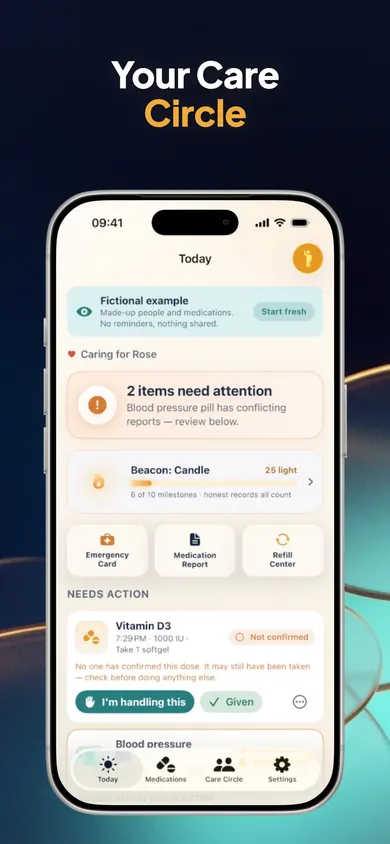
No app can. DoseBeacon records what was reported, by whom and when; a logged dose is a report, not proof a medicine was swallowed.
Is DoseBeacon free?
Reminders, one patient, two active medications, one helper, full history, PDF reports and the emergency card are free. DoseBeacon Family ($8.99 a month or $59.99 a year) adds unlimited active medications, more caregivers and the Dose Handshake.
What are the signs a parent isn't taking medication correctly?
The clearest signs are things you can count: pills left over, full pillbox days, late refills and duplicate bottles; new confusion, dizziness or falls mean it is time to call the prescriber or pharmacist.
- Missed doses (the first three clues). Usually a memory or routine problem. A fixed time tied to a meal, a pillbox, and a reminder that speaks up help; the NIA (2022) lists pillboxes, charts, timers and apps.
- Mix-ups and doubles (clues four to six). One complete list, one pharmacy where possible, and good light when taking pills are all on the NIA's list (2022).
- Call-the-pharmacist flags (clue seven). The NIA (2021) names confusion and falls as side effects to watch for. Adverse drug events cause more than 1.5 million U.S. emergency visits a year (CDC, 2024).
- Housekeeping (the last two). Dispose of expired medicines and ask about generics or programs like Medicare Extra Help, as the NIA (2022) suggests.
This is general information, not medical advice. Talk to your clinician.
How to set up a medication check-in, in 3 steps
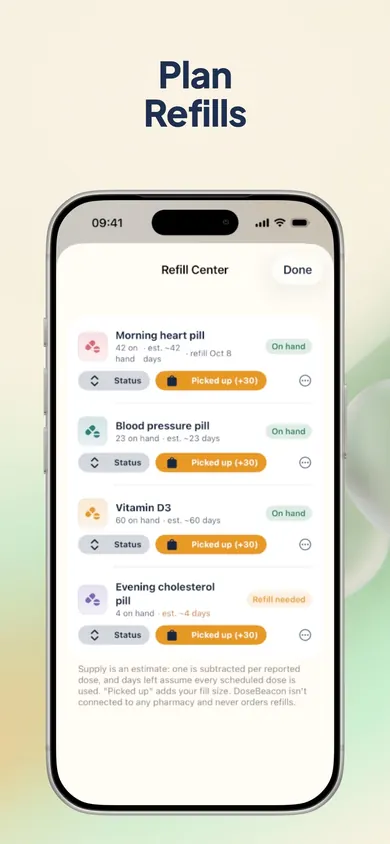
- Build one list together. Scan each pharmacy label to make a draft, then check every field before any reminder turns on.
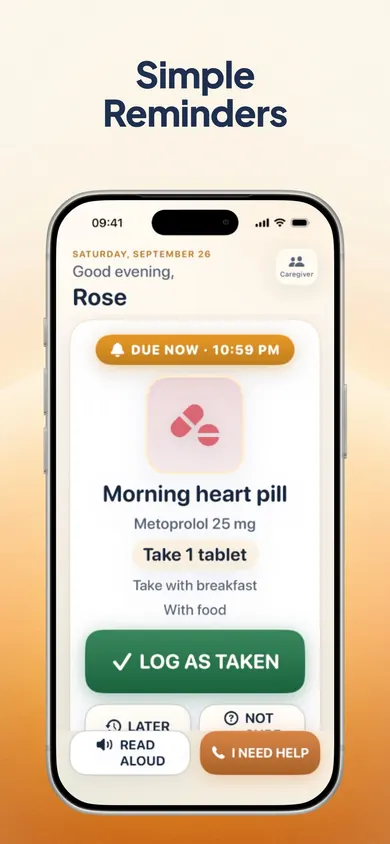
- Turn on Senior Mode on their phone. One large card at a time, read-aloud, and no ads or purchase screens.
- Join from yours. Your parent approves your request in a Care Circle. A dose nobody reported shows as "Not confirmed yet", so you know what to ask about on the phone.
Who should pick something else
If your parent has no smartphone and won't use one, a pillbox with an alarm and a weekly visit will do more than any app. If doses must be physically locked until the right time, look at a locked automatic dispenser. And if more than two medicines need reminders, plan on DoseBeacon Family rather than the free plan.
Swap the guessing for a record
Set it up on your next visit, side by side, in about ten minutes. Open DoseBeacon in the App Store.

Updated November 2026
Related
- DoseBeacon: large-text pill reminders with a family Care CircleLarge-text pill reminders for aging parents, plus a shared record of reported doses for family helpers. Free on iPhone, works offline.
- How to help someone with dementia take medicationA calm 2-minute pill check for families caring for someone with dementia: what to do, what to record, and when to call the pharmacist.
- Long-distance caregiver medication management: the 5-minute weekly callManaging a parent's medications from another city: sort which jobs you can do from afar, then run a 5-minute weekly call. A worked example.
- How to prevent double dosing at home: six mistakes and fixesSix everyday mistakes that lead to a double dose at home, and the fix for each. Pick your household setup and see the one check that matters most.